

PUBLISHER'S NOTE – 56.1
Written by SP Editor

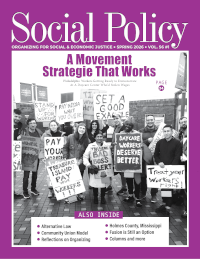
There was a time when things looked and seemed different than the bleak and blurred picture of the present and future before us now. This is almost a running theme for this number of Social Policy.
Frequent contributor and longtime labor activist and journalist, Steve Early, shares some of the optimism of fifty years ago from his reunion with fellow students who were veterans of the idealist Antioch Law School with reflections on what happened and where we have landed now. Rob McKenzie inadvertently picks up that theme as a former UAW local leader as he tries to make sense of why the early advocacy of Walter Reuther for a community-union labor organizing model had such promising results, but didn't lead to widespread rethinking of labor strategy and union practice. David Thompson excavates the experience he and colleagues had trying to build exactly that kind of model and the results their work produced in Philadelphia. Thinking about where we are now in light of these three pieces should give us pause, as we look equally critically at where our work stands now.
None of these authors goes back as far as Dan Cantor does in an excerpt of his recent essay on fusion voting and the "two-party doom loop." How political life might be enlivened and more democratic, if we could revive the options that multi-party endorsements on shared ballot lines offered more than one-hundred years ago and continue in New York State and precious few others. Those were lessons from the real Populist Movement for today. Mike Miller in his review of the civil rights struggle in Holmes County, Mississippi, revives lessons from a more recent time seventy years ago, that we are also still grappling with in our own time.
The columns are of this time. Phil Mattera in a brilliant piece of work goes past the headlines in looking at a $68-million consumer settlement initiated by the Consumer Financial Protection Bureau with Colony Ridge over deceiving consumers on their flood insurance in Houston that was highjacked by the state of Texas and the Justice Department to deal with immigration without consumers receiving a dime. Drummond Pike connects the dots between the labor crises in agricultural labor, including vineyards, and the ICE deportation efforts and the lack of viable paths to deal constructively with the need for immigrant labor. John Anderson, similarly makes the case that climate change affects our base in multiple ways, including the way that costs are transferred to consumers in British Columbia for LNG exportation facilities, as the world burns. Gregory Squires breaks down the evisceration of HUD and fair housing protections by the current Trump administration. Finally, in Backstory, I argue that no one will be willing to take a bet on Trump's prediction that we will be in and out of his war in Iran in four or five weeks.
This is a solid issue, but, sadly, won't bring any more smiles to the readers than it did to the authors. We read and weep together, as we try to learn from our past in order to plot a better future and wring out hands about current events as we stand to oppose these policies.